The inaugural meeting marked the launch of the PharmaScienceHub. Dedicated work groups were formed to shape the future of drug development and medical science advancement. Participants leveraged their combined expertise to drive innovation...
Read More
The inaugural meeting marked the launch of the PharmaScienceHub. Dedicated work groups were formed to shape the future of drug development and medical science advancement. Participants leveraged their combined expertise to drive innovation in the field.
Show Less
The ShapeScience Meeting focused on refining the PSH work program, facilitating scientific exchange, and hosting talks with discussions. Participants networked, shared ideas, and contributed to pharmaceutical science advancements.
Paul Wilmes, professor at Luxembourg Centre for Systems Biomedicine, will talk about the “Systems ecology of the human expobiome”. His talk explores the functional microbiome, focusing on microbiome-derived molecules in immune system regula...
Read More
Paul Wilmes, professor at Luxembourg Centre for Systems Biomedicine, will talk about the “Systems ecology of the human expobiome”. His talk explores the functional microbiome, focusing on microbiome-derived molecules in immune system regulation and potential therapeutic applications.
Show Less
Join us as for the first joint nextAID³ & PSH symposium with talks, discussions, and networking opportunities with our experts from the fields of pharmacy, informatics and biomedical research.
HIPS - International Conference on Anti-infectives 2025 (ICA 2025)
This conference will bring together esteemed scientists and emerging researchers from four key pharmaceutical disciplines: natural product chemistry and genomics, bioinformatics and microbiome research, medicinal chemistry, and drug deliver...
Read More
This conference will bring together esteemed scientists and emerging researchers from four key pharmaceutical disciplines: natural product chemistry and genomics, bioinformatics and microbiome research, medicinal chemistry, and drug delivery. Over three days, participants will engage in scientific lectures delivered by leading experts, presentations by young investigators, and poster sessions, creating a dynamic platform for exchange and collaboration.
Show Less
Shorter bridges for closing the gap? Neue Methoden zur Verbesserung der Translation von neuartigen Anti-Infektiva
The translation of novel anti-infective agents into clinical application entails numerous challenges before innovative therapeutics can ultimately benefit patients. In light of the emergence of novel viral pathogens and the global surge in...
Read More
The translation of novel anti-infective agents into clinical application entails numerous challenges before innovative therapeutics can ultimately benefit patients. In light of the emergence of novel viral pathogens and the global surge in antimicrobial resistance, there is an urgent need to accelerate development pipelines.Beyond conventional preclinical in vitro and in vivo models, this presentation will highlight two approaches that exemplify how translational research may evolve in the future.Using the hollow-fiber infection model, I will illustrate how therapeutic regimens can be precisely calibrated to more effectively suppress the emergence of resistance.Moreover, I will discuss how in silico modeling strategies—particularly those focused on pharmacokinetics and pharmacodynamics—can inform the rational design of next-generation anti-infective therapies, thereby expanding the arsenal against infectious diseases.
Show Less
Get to know the EpiGenomics Sequencing Facility Saarbrücken and the NGS Sequencing Facility Homburg—two key platforms offering cutting-edge epigenomic and transcriptomic technologies. Learn how these facilities support your research with se...
Read More
Get to know the EpiGenomics Sequencing Facility Saarbrücken and the NGS Sequencing Facility Homburg—two key platforms offering cutting-edge epigenomic and transcriptomic technologies. Learn how these facilities support your research with services from bulk RNA-Seq to single-cell and spatial genomics.
Show Less
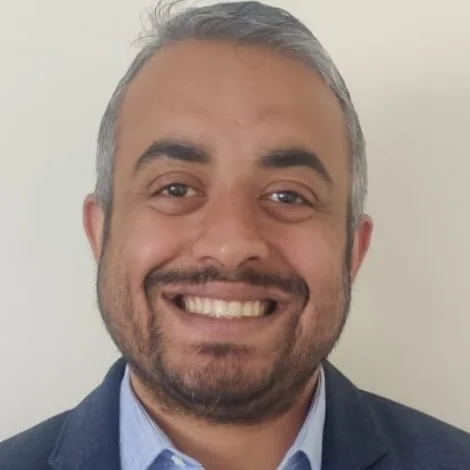
Rahul Dwivedi: GARDP's strategy to provide access to novel antibiotics in low- and middle-income countries
With over 10 years of experience across diverse healthcare systems worldwide, Rahul has led innovative strategies to improve access to treatment for cancer, hemophilia, diabetes, and now serious bacterial infections. His work blends health...
Read More
With over 10 years of experience across diverse healthcare systems worldwide, Rahul has led innovative strategies to improve access to treatment for cancer, hemophilia, diabetes, and now serious bacterial infections. His work blends health system strengthening, digital health innovation, and cross-sector partnerships.
Show Less
Stefan M. Pfister, professor at KiTZ/DKFZ Heidelberg and Hopp Children’s Cancer Center, will talk about “Turning big data into patient benefit in pediatric oncology”. His talk showcases how integrated multi-omics, functional drug screening,...
Read More
Stefan M. Pfister, professor at KiTZ/DKFZ Heidelberg and Hopp Children’s Cancer Center, will talk about “Turning big data into patient benefit in pediatric oncology”. His talk showcases how integrated multi-omics, functional drug screening, and translational platforms—such as INFORM and ITCC-P4—drive precision medicine and preclinical drug development for children with cancer.
Show Less
With this event, the PSH initiates a series of events that brings together experts from academia and industry in the field of pharmaceutical research. The aim is to jointly develop innovative ideas and establish collaborations.
Volker Derdau, Senior Distinguished Scientist and Head Department of Isotope Chemistry at Sanofi’s Center of Excellence, will give a talk will talk titled "Chasing the Miracles of Science in Drug Discovery by Isotope Chemistry." His talk h...
Read More
Volker Derdau, Senior Distinguished Scientist and Head Department of Isotope Chemistry at Sanofi’s Center of Excellence, will give a talk will talk titled "Chasing the Miracles of Science in Drug Discovery by Isotope Chemistry." His talk highlight recent advances in hydrogen and carbon isotope exchange techniques, as well as photocatalytic skeletal editing.
These approaches enable the efficient synthesis of labeled compounds that are essential for ADME studies, metabolic profiling, and radioligand binding assays. The talk shows how isotope chemistry serves as a powerful tool for accelerating pharmaceutical research.
Show Less
PSH TechTalk - Introduction to Correlative Microscopy and Tomography
Get to Know Correlative Microscopy and Tomography (CoMiTo) Facility, its capabilities, and practical guidance on how researchers can access and use its services.
CoMiTo offers advanced quantitative microstructure analysis in two‑ and three...
Read More
Get to Know Correlative Microscopy and Tomography (CoMiTo) Facility, its capabilities, and practical guidance on how researchers can access and use its services.
CoMiTo offers advanced quantitative microstructure analysis in two‑ and three‑dimensional imaging, as well as micro‑ and nanomechanical characterization techniques. Supported by three dedicated departments that contribute their expertise and instrumentation, the facility integrates previously independent equipment and research themes. Its mission is to provide expert access to a broad spectrum of analytical methods while enabling new, interdisciplinary research questions through scale‑ and method‑crossing approaches. All services are available to USAAR members and external scientists in accordance with established usage regulations.
Show Less
PSH TechTalk - Introduction to High Resolution Microscopy
Get to know "High-Resolution Microscopy" facility, its capabilities, and practical guidance on how researchers can access and use its services. Based at the Interfaculty Center for Biophysics (ZBP) on Saarbrücken campus, the facility offers...
Read More
Get to know "High-Resolution Microscopy" facility, its capabilities, and practical guidance on how researchers can access and use its services. Based at the Interfaculty Center for Biophysics (ZBP) on Saarbrücken campus, the facility offers a broad spectrum of optical microscopy techniques for both fixed samples and live-cell imaging, spanning from epifluorescence and confocal microscopy to super-resolution microscopy (STED). It also integrates biophysical measurement methods into imaging instruments, enabling cell-mechanical measurements (RT-DC) and dynamic measurements (FRAP). Users can benefit from practical training, as well as expert support in data analysis, experiment design, and protocol development. All services are available to USAAR members and external scientists in accordance with established usage regulations.
Show Less
Get to know the “Mass Spectrometry” facility, a central infrastructure for the comprehensive analysis of biological samples. The facility offers both untargeted and targeted analytical approaches, with a particular focus on research in prot...
Read More
Get to know the “Mass Spectrometry” facility, a central infrastructure for the comprehensive analysis of biological samples. The facility offers both untargeted and targeted analytical approaches, with a particular focus on research in proteomics, metabolomics, and small molecules. Its main focus is to investigate functional relationships within complex biological systems. In proteomics, proteins are analyzed both qualitatively and quantitatively, including their post-translational modifications, to characterize cellular signaling pathways, disease mechanisms, and local interactomes. Metabolomics enables the systematic profiling of low-molecular-weight metabolites, reflecting the current physiological state of cells and organisms. State-of-the-art infrastructure is also available for pharmacokinetic and toxicokinetic studies. By combining modern mass spectrometric technologies with chromatographic separation methods, even highly complex samples can be analyzed with high sensitivity and specificity. The Core Facility supports the entire workflow–from sample preparation and measurement to data analysis and interpretation.
Show Less
At the Open Campus (formerly Open House Day), the Saarland University (UdS) showcases the offerings of both university locations in Homburg and Saarbrücken every year, as well as the scientific topics that are discussed, researched, and tau...
Read More
At the Open Campus (formerly Open House Day), the Saarland University (UdS) showcases the offerings of both university locations in Homburg and Saarbrücken every year, as well as the scientific topics that are discussed, researched, and taught at UdS. UdS informs all prospective students about our comprehensive range of degree programs. Our visitors can look forward to great program highlights that allow them to get to know their UdS in all its diversity. This also includes our international offerings such as campus tours in foreign languages. The PSH will also present its activities at this event.
Show Less
Upcoming
German Conference on Bioinformatics
The German Conference on Bioinformatics (GCB2026) is an annual international meeting that brings together researchers from all fields of bioinformatics. Over the years, it has become a platform for the entire bioinformatics community. Recen...
Read More
The German Conference on Bioinformatics (GCB2026) is an annual international meeting that brings together researchers from all fields of bioinformatics. Over the years, it has become a platform for the entire bioinformatics community. Recent meetings attracted a multinational audience of approximately 270 participants each year
This year is extra special: we’re celebrating the 40th anniversary of the GCB at Saarland University in Saarbrücken! Expect inspiring talks, engaging poster sessions, and plenty of opportunities to connect with colleagues and friends – from lively discussions to the festive conference dinner.
Join us for this year’s anniversary edition – we can’t wait to celebrate together in Saarbrücken!
Show Less