Applications deadline postponed: ELLIS Summer School 2026 – TRAID
We are delighted to announce that applications deadline is postponed for the ELLIS Summer School 2026 on Trustworthy & Responsible AI in Drug Discovery (TRAID)!
New Application deadline: 19 July 2026, 23:59 (CEST)
📍 Saarland University,... Read More
We are delighted to announce that applications deadline is postponed for the ELLIS Summer School 2026 on Trustworthy & Responsible AI in Drug Discovery (TRAID)!
New Application deadline: 19 July 2026, 23:59 (CEST)
📍 Saarland University, Saarbrücken, Germany
📅 24–28 August 2026
The summer school will bring together students, researchers, and professionals interested in the development and application of trustworthy, responsible, and innovative AI methods in drug discovery and pharmaceutical research.
👉 Apply here:
Program and further information can be found on our website: Show Less
What a great PSH Talk! 🎉
Yesterday we got to host Dr. Tatjana Ross from Merck Healthcare @ Saarland University. The session was aimed at early career researchers.
In her talk "Beyond Research: Career Growth, Communication, and Leadersh... Read More
What a great PSH Talk! 🎉
Yesterday we got to host Dr. Tatjana Ross from Merck Healthcare @ Saarland University. The session was aimed at early career researchers.
In her talk "Beyond Research: Career Growth, Communication, and Leadership in Science," Dr. Ross drew on her personal experience to share insights into career development, leadership, mentoring, and supporting young scientists, followed by a lively open discussion.
Thanks so much, Dr. Ross — and thanks to everyone who came out!
Curious about her work? Check out her LinkedIn:
Photo: PSH Show Less
Applications now open: ELLIS Summer School 2026 – TRAID
Applications now open: ELLIS Summer School 2026 – TRAID
We are delighted to announce that applications are now open for the ELLIS Summer School 2026 on Trustworthy & Responsible AI in Drug Discovery (TRAID)!
📍 Saarland University, Saarb... Read More
Applications now open: ELLIS Summer School 2026 – TRAID
We are delighted to announce that applications are now open for the ELLIS Summer School 2026 on Trustworthy & Responsible AI in Drug Discovery (TRAID)!
📍 Saarland University, Saarbrücken, Germany
📅 24–28 August 2026
The summer school will bring together students, researchers, and professionals interested in the development and application of trustworthy, responsible, and innovative AI methods in drug discovery and pharmaceutical research.
Application deadline: 21 June 2026, 23:59 (CEST)
👉 Apply here:
Further information can be found on our website: Show Less
Recap: PSH Core Facility TechTalks
Another great session in our PSH TechTalk series: yesterday we explored the Element Analysis & Mass Spectrometry (ELMAS) Core Facility with Aaron Haben and Kevin Staudt. It offers tailored solutions fo... Read More
Recap: PSH Core Facility TechTalks
Another great session in our PSH TechTalk series: yesterday we explored the Element Analysis & Mass Spectrometry (ELMAS) Core Facility with Aaron Haben and Kevin Staudt. It offers tailored solutions for analyzing complex organic and inorganic samples.
Elemental Analysis
From CHN-S analysis to ICP-MS and triple quadrupole (QQQ) systems, enabling ultra-trace elemental and isotopic measurements across a wide range of sample types.
High-Resolution Mass Spectrometry
FT-ICR-MS with multiple ionization techniques (ESI, APPI, APCI, MALDI) and HPLC integration, supporting research areas such as metabolomics, lipidomics, and proteomics.
The facility also supports sample preparation services and allows trained users to independently operate selected instruments via a rental system.
about ELMAS:
Photo: Saarland University Show Less
We are pleased to announce the ELLIS Summer School 2026 on Trustworthy & Responsible AI in Drug Discovery (TRAID), taking place 24–28 August 2026 at Saarland University, Saarbrücken.
Over one intensive week, PhD students, postdocs, and... Read More
We are pleased to announce the ELLIS Summer School 2026 on Trustworthy & Responsible AI in Drug Discovery (TRAID), taking place 24–28 August 2026 at Saarland University, Saarbrücken.
Over one intensive week, PhD students, postdocs, and researchers will engage with leading experts on how to make AI trustworthy and interpretable in pharmaceutical research, through lectures, hands-on sessions, and networking. Applications will open soon.
More information: Show Less
Final take: Call for Talks - German Conference on Bioinformatics
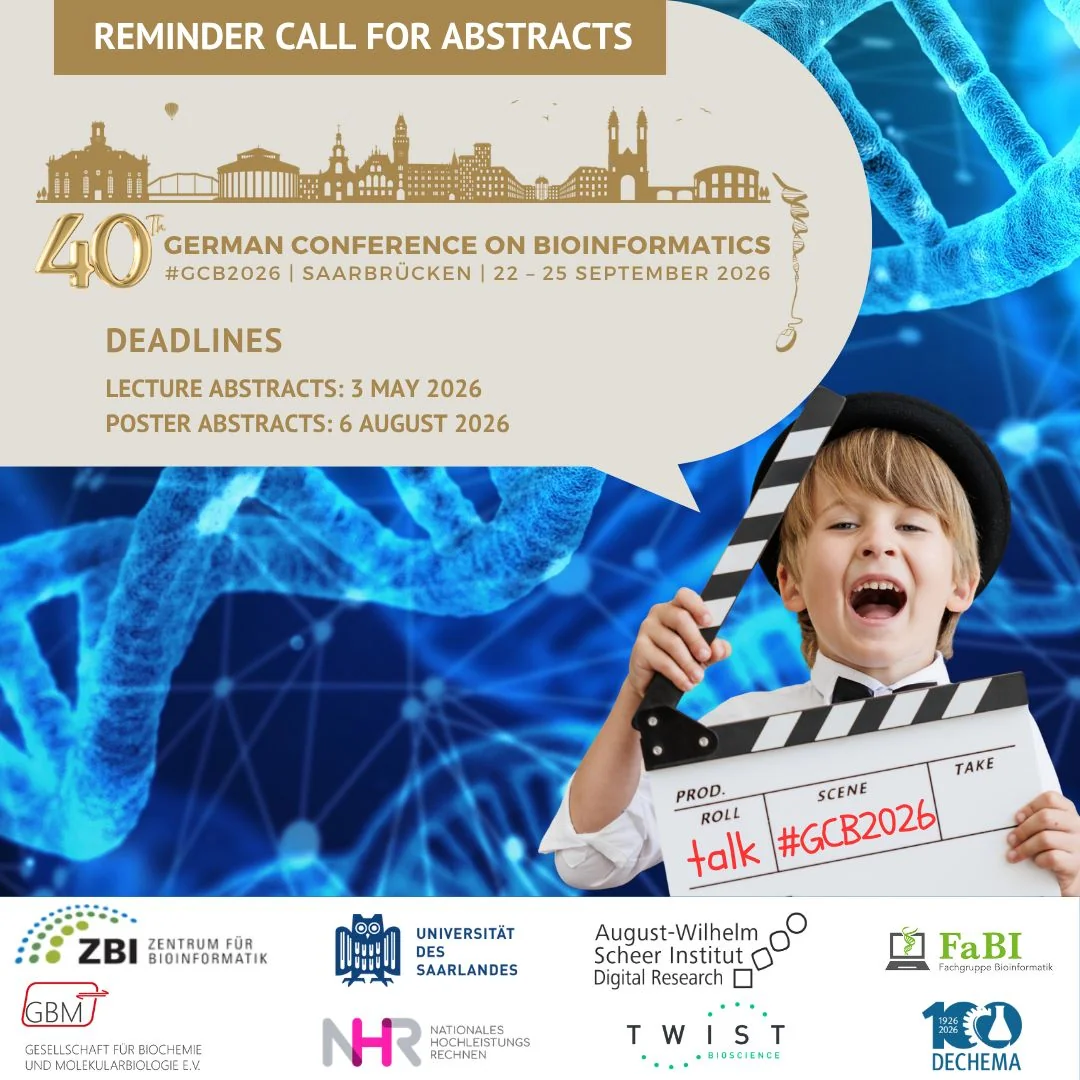
Join us at GCB2026 as we celebrate 40 years of connecting the community across and computational biology.
📍 Saarland University, Saarbrücken | 🗓 22–25 September 2026
Details & submission:
Lecture abstracts deadline: 3 May 2026
Poster a... Read More
Join us at GCB2026 as we celebrate 40 years of connecting the community across and computational biology.
📍 Saarland University, Saarbrücken | 🗓 22–25 September 2026
Details & submission:
Lecture abstracts deadline: 3 May 2026
Poster abstracts deadline: 6 August 2026 (max. 150 – first come, first served!)
✨ Keynote Speakers
Nima Aghaeepour (Stanford University)
Camille Marchet (Université de Lille) ·
Pavel Pevzner (UC San Diego) ·
Johannes Soeding (Max-Planck-Institut für Multidisziplinäre Naturwissenschaften)
Supporters
Twist Bioscience
NHR-Verein
GBM - Gesellschaft für Biochemie und Molekularbiologie e.V.
August-Wilhelm Scheer Institut
Organizing committee: CBI, SIC, PSH – together with DECHEMA, HIPS and SIC. Show Less
Recap: PSH Core Facility TechTalks
In our latest PSH TechTalk, we spotlighted our Mass Spectrometry Core Facility, a central infrastructure for the comprehensive analysis of biological samples.
What they offer OR research focus:
Proteomics... Read More
Recap: PSH Core Facility TechTalks
In our latest PSH TechTalk, we spotlighted our Mass Spectrometry Core Facility, a central infrastructure for the comprehensive analysis of biological samples.
What they offer OR research focus:
Proteomics — qualitative and quantitative protein analysis, including post-translational modifications, to characterize signaling pathways, disease mechanisms, and local interactomes.
Metabolomics — systematic profiling of low-molecular-weight metabolites, reflecting the physiological state of cells and organisms.
Small molecules — state-of-the-art infrastructure for pharmacokinetic and toxicokinetic studies.
By combining cutting-edge mass spectrometry with chromatographic separation, even the most complex samples reveal their secrets, with high sensitivity and precision. From sample preparation to data analysis and interpretation , the facility supports the entire workflow
Photo: PharmaScienceHub Show Less
🚀 PharmaScienceHub continues to grow
We are happy to share that the PharmaScienceHub community continues to grow, further strengthening translational collaboration across interdisciplinary disciplines.
PSH in numbers:
85 research groups
~50... Read More
🚀 PharmaScienceHub continues to grow
We are happy to share that the PharmaScienceHub community continues to grow, further strengthening translational collaboration across interdisciplinary disciplines.
PSH in numbers:
85 research groups
~500 researchers
9 profile areas
30+ industry partners
Strong industry partnerships continue to drive translational research, including new collaborations with Beiersdorf AG and Dr. Theiss Naturwaren GmbH.
We are excited to continue growing and welcoming new members to the network.
👉 Interested in becoming a PSH member? Click here: Show Less
PSH Core Facility Tech Talks Recap: High-Resolution Microscopy Core Facility
Last week, we had the opportunity to get an in-depth look at our High-Resolution Microscopy Core Facility.
Franziska Lautenschläger, Laura Aradilla Zapata, Divyend... Read More
PSH Core Facility Tech Talks Recap: High-Resolution Microscopy Core Facility
Last week, we had the opportunity to get an in-depth look at our High-Resolution Microscopy Core Facility.
Franziska Lautenschläger, Laura Aradilla Zapata, Divyendu Goud Thalla, and Subham Biswas gave an overview of the imaging techniques available within the facility — covering their underlying principles, specific capabilities, and typical areas of application. Recent usage statistics, access procedures, and booking processes were also presented.
A representative research project on Pretubulysin, a microtubule-targeting compound, illustrated the integrated use of multiple microscopy modalities across scales. By combining complementary imaging approaches, the study demonstrates how coordinated access to diverse technologies can support detailed and mechanistic analysis, highlighting the role of an interconnected, modern microscopy core facility in enabling such work.
More TechTalks to follow.
about the core facility:
Photo: PSH Show Less
Research Team Led by PSH Member Alexandra K. Kiemer Identifies Protein Driving Tumor Progression
The protein IMP2 plays a key role in tumor growth. A research team led by PSH member Prof. Alexandra K. Kiemer has discovered that when macrophages produce IMP2 in the immediate vicinity of cancer cells, tumors grow faster under laboratory... Read More
The protein IMP2 plays a key role in tumor growth. A research team led by PSH member Prof. Alexandra K. Kiemer has discovered that when macrophages produce IMP2 in the immediate vicinity of cancer cells, tumors grow faster under laboratory conditions.
The researchers suspect that IMP2 facilitates the infiltration of macrophages into the tumor, thereby supporting tumor progression. In earlier work, the team had already shown that cancer cells exploit IMP2 to repolarize macrophages into tumor-promoting macrophages.
This fundamental research may contribute to the development of new therapeutic strategies against cancer. The findings have been published in the International Journal of Biological Sciences.
Photo: Oliver Dietze
Copyright: Saarland University Show Less
Yesterday we launched our new PSH Core Facility TechTalks series.
Saarland University, together with HIPS and other partner institutes, hosts a wide range of advanced research infrastructure. The PSH Core Facility TechTalks give researchers... Read More
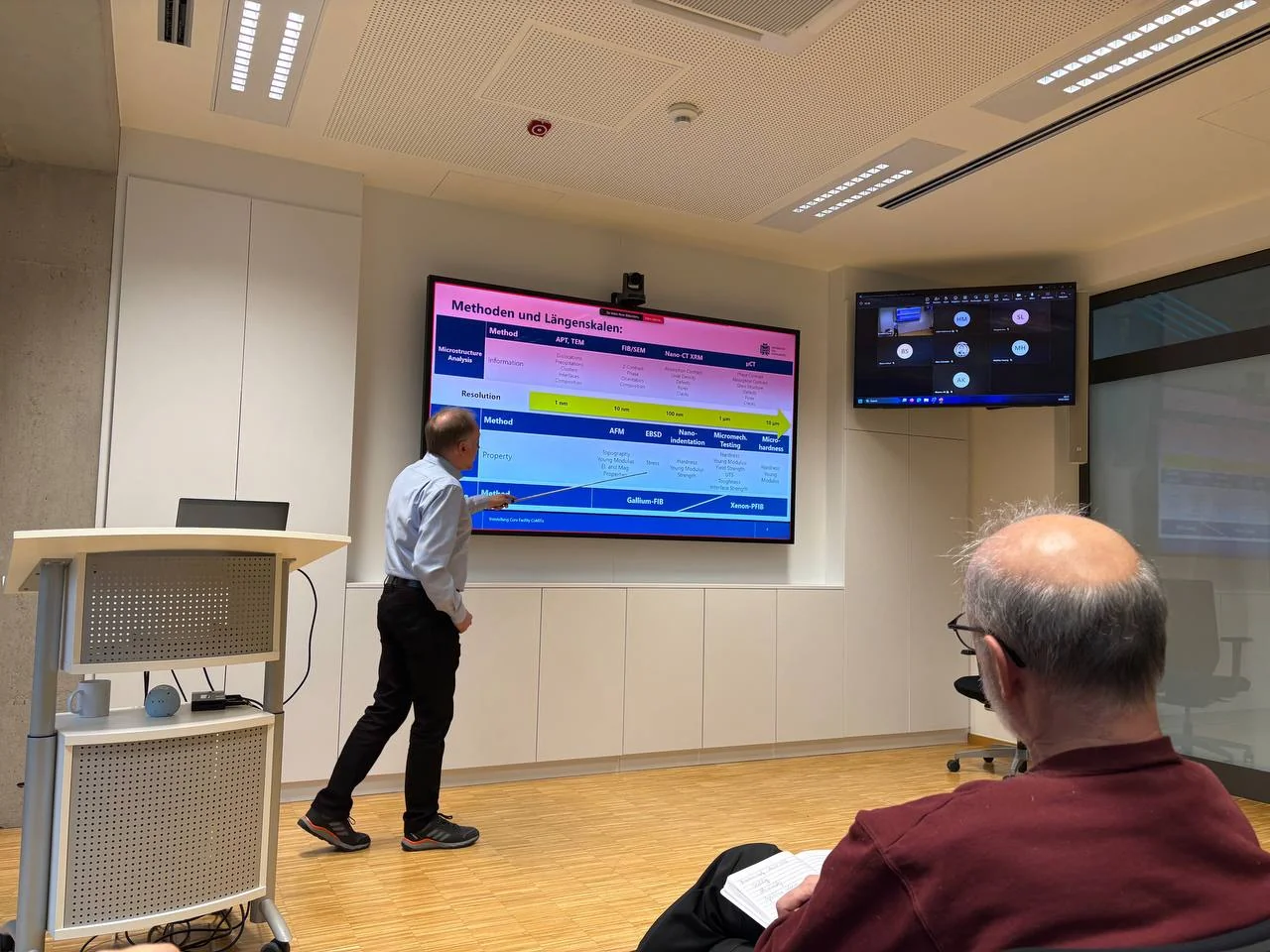
Yesterday we launched our new PSH Core Facility TechTalks series.
Saarland University, together with HIPS and other partner institutes, hosts a wide range of advanced research infrastructure. The PSH Core Facility TechTalks give researchers a closer look at the capabilities available and highlight technologies with strong potential for interdisciplinary collaboration and innovation.
In our first session, the researchers got to know the Correlative Microscopy and Tomography (CoMiTo) facility, its capabilities, and received practical guidance on how they can access and use its services. CoMiTo offers advanced quantitative microstructure analysis in two- and three-dimensional imaging, as well as micro- and nanomechanical characterization techniques. Supported by three dedicated departments that contribute their expertise and instrumentation, the facility integrates previously independent equipment and research themes. Its mission is to provide expert access to a broad spectrum of analytical methods while enabling new, interdisciplinary research questions through scale- and method-crossing approaches. All services are available to USAAR members and external scientists in accordance with established usage regulations.
Thank you to Prof. Christian Motz for the insightful presentation!
More TechTalks to follow.
Photos: PharmaScienceHub Show Less
How Spaceflights Affect the Body – New Insights from MicroRNA Research
Flights to the ISS are marked by high levels of stress: the launch generates intense physical strain, microgravity alters blood circulation and affects aging processes, and radiation exposure in space is increased. A team led by PSH member... Read More
Flights to the ISS are marked by high levels of stress: the launch generates intense physical strain, microgravity alters blood circulation and affects aging processes, and radiation exposure in space is increased. A team led by PSH member and speaker Prof. Dr. Andreas Keller in collaboration with colleagues from Stanford University, studied how prolonged stays aboard the ISS affect biological processes in mice. The researchers analyzed microRNAs, small RNA molecules that regulate gene activity. In total, 686 small RNA samples from 13 different organs were available for analysis.
“This produced enormous amounts of gene sequencing data, which we analyzed using our bioinformatics methods. These analyses, which built on our long-standing experience with microRNAs, took over a year to complete. We found that the physiological effects of space flight on humans are significant. A prolonged stay in weightlessness leads to symptoms similar to the degenerative diseases observed on Earth. These include muscle and bone loss, a weakened cardiovascular system and changes in the immune system,” explains Andreas Keller. In addition, the team observed that organs age differently in weightlessness, which presumably leads to faster ageing in astronauts. 'These effects intensify with the duration of the mission, which must be taken into account for future missions to Mars and beyond, which would last significantly longer. The goal now should be to identify biomarkers and therapeutic approaches through further research in order to mitigate the negative effects on astronauts,' explains Andreas Keller.
The research findings were published in the prestigious journal Nature Communications. First authors are Friederike Grandke and Shusruto Rishik. The study was carried out under the guidance of Prof. Andreas Keller (Saarland University) and Prof. Tony Wyss-Coray (Stanford University). In addition, the project was carried out in cooperation with NASA. A follow-up publication is planned.
Check out the SWR interview with Andreas Keller:
Photos: Lucia Bernhardt (HIPS) Show Less
Oskar Staufer Awarded the Alois Lauer Research Prize
Advancing Cancer Immunotherapy
Cancer cells often evade the body’s natural immune defenses, making targeted treatment a major scientific challenge.
PSH member Oskar Staufer, Group Leader at the Leibniz Institute for New Materials in Saarbrü... Read More
Advancing Cancer Immunotherapy
Cancer cells often evade the body’s natural immune defenses, making targeted treatment a major scientific challenge.
PSH member Oskar Staufer, Group Leader at the Leibniz Institute for New Materials in Saarbrücken, has developed an innovative approach that could help make immunotherapies more effective.
His research focuses on so-called bispecific T-cell engagers — engineered antibodies designed to bind simultaneously to an immune cell and a cancer cell, bringing them into close proximity enabling the immune cell to effectively eliminate the cancer cell.
How exactly are these antibodies designed?
Working in an international team between the UK and Germany, Staufer investigated four different antibody formats using artificial cell systems — precisely engineered cell models rather than natural cells. This innovative methodology allowed the team to uncover crucial design principles.
Their findings show that not only the size, but especially the flexibility of these antibodies plays a critical role. In addition, the optimal physical distance between immune cell and cancer cell is essential for effective tumor destruction.
These insights now make it possible to design antibodies more precisely — paving the way for more effective cancer drugs that better activate the immune system.
For this scientific breakthrough, Oskar Staufer was awarded the Alois Lauer Medical Research Prize 2025. The award honors young scientists who have achieved outstanding contributions to medical research. We congratulate Oskar Staufer on this great achievement!
Photo: privat Show Less
Oskar Staufer Awarded the Alois Lauer Research Prize
Advancing Cancer Immunotherapy
Cancer cells often evade the body’s natural immune defenses, making targeted treatment a major scientific challenge.
PSH member Oskar Staufer, Group Leader at the Leibniz Institute for New Materials in Saarbrü... Read More
Advancing Cancer Immunotherapy
Cancer cells often evade the body’s natural immune defenses, making targeted treatment a major scientific challenge.
PSH member Oskar Staufer, Group Leader at the Leibniz Institute for New Materials in Saarbrücken, has developed an innovative approach that could help make immunotherapies more effective.
His research focuses on so-called bispecific T-cell engagers — engineered antibodies designed to bind simultaneously to an immune cell and a cancer cell, bringing them into close proximity enabling the immune cell to effectively eliminate the cancer cell.
How exactly are these antibodies designed?
Working in an international team between the UK and Germany, Staufer investigated four different antibody formats using artificial cell systems — precisely engineered cell models rather than natural cells. This innovative methodology allowed the team to uncover crucial design principles.
Their findings show that not only the size, but especially the flexibility of these antibodies plays a critical role. In addition, the optimal physical distance between immune cell and cancer cell is essential for effective tumor destruction.
These insights now make it possible to design antibodies more precisely — paving the way for more effective cancer drugs that better activate the immune system.
For this scientific breakthrough, Oskar Staufer was awarded the Alois Lauer Medical Research Prize 2025. The award honors young scientists who have achieved outstanding contributions to medical research. We congratulate Oskar Staufer on this great achievement!
Photo: privat Show Less
HIPS Researchers Discover Parkinson’s Drug As a Basis for New Anti-Infectives
When the hospital germ Pseudomonas aeruginosa infects the body, it uses the sugar-binding protein LecA to attach itself to human cells, invade them, and form so-called biofilms. LecA thus plays a central role in the development and progress... Read More
When the hospital germ Pseudomonas aeruginosa infects the body, it uses the sugar-binding protein LecA to attach itself to human cells, invade them, and form so-called biofilms. LecA thus plays a central role in the development and progression of infections with this pathogen, which is classified as particularly critical by the WHO. At team led by PSH member Alexander Titz (Helmholtz Institute for Pharmaceutical Research Saarland (HIPS)) have now discovered that the approved Parkinson's drug tolcapone is able to specifically inhibit the activity of LecA. This finding allows the research team to develop new strategies for combating Pseudomonas infections. The researchers published their findings in the journal Angewandte Chemie International Edition.
Publication:
Photo: HIPS/Leusmann Show Less
PSH Member Prof. Dr. Tim Meyer Awarded the Saarland Order of Merit
Yesterday, our PSH member and renowned sports physician Prof. Dr. Tim Meyer was awarded the Saarland Order of Merit by Minister-President Anke Rehlinger at the State Chancellery. With the state’s highest distinction, she honored his outstan... Read More
Wishing you a Merry Christmas and a peaceful holiday season!
Thank you for your support, collaboration, and trust throughout the past year.
We look forward to continuing our mission of advancing interdisciplinary pharmaceutical research and... Read More
Wishing you a Merry Christmas and a peaceful holiday season!
Thank you for your support, collaboration, and trust throughout the past year.
We look forward to continuing our mission of advancing interdisciplinary pharmaceutical research and innovation together in 2026.
Warm wishes from the entire PharmaScienceHub team! 🎄 Show Less
Studies Confirm Drug-Coated Balloons Initially Developed by PSH Member Bruno Scheller As a Stent Alternative in Larger Coronary Vessels
An international study with over 3,300 patients now confirms that drug-coated balloon catheters (DCB), initially developed by PSH Member Professor Bruno Scheller and Professor Ulrich Speck from the Charité in Berlin, achieve excellent resul... Read More
An international study with over 3,300 patients now confirms that drug-coated balloon catheters (DCB), initially developed by PSH Member Professor Bruno Scheller and Professor Ulrich Speck from the Charité in Berlin, achieve excellent results in preventing narrowing even in larger coronary arteries – often replacing the need for stents.
How it works:
A thin tube is inserted into the narrowed heart vessel. A tiny balloon at its tip gently widens the vessel while delivering medication directly into the vessel membrane. This prevents re-narrowing of the artery over weeks and months.
Why it matters:
Cardiovascular diseases remain one of the leading causes of death worldwide. Minimally invasive innovations like the drug-coated balloon catheter provide safe, effective treatment options.
Today, drug-coated balloon catheters are one of the leading therapies for arterial narrowing.
Photo: Bruno Scheller Show Less
Alexey Gurevich and Kenan Bozhüyük from HIPS, have been awarded the Helmholtz Initiative and Networking Fund (INF) for their project ADD-ON!
Exciting News! 🎉
We're thrilled to announce that two of our PSH members, Alexey Gurevich and Kenan Bozhüyük from HIPS, have been awarded the Helmholtz Initiative and Networking Fund (INF) for their project ADD-ON!
Their research focuse... Read More
Exciting News! 🎉
We're thrilled to announce that two of our PSH members, Alexey Gurevich and Kenan Bozhüyük from HIPS, have been awarded the Helmholtz Initiative and Networking Fund (INF) for their project ADD-ON!
Their research focuses on: Nonribosomal peptides (NRPs) – bioactive microbial products with vast pharmaceutical potential. These compounds are made by modular enzymes, where each module - defined by its Adenylation (A) domain - adds a specific amino acid to create the final product.
The challenge? Despite extensive research, A domain substrate specificity remains poorly understood. Existing datasets are biased and incomplete, limiting prediction tool performance and hindering NRP discovery.
The solution: ADD-ON 💡 This project will create a game-changing standardized benchmark by combining curated public data with new quantitative measurements from our in-house high-throughput experimental platform – aiming to double the number of characterized enzyme domains! The data will include sequence, structural, and functional information, all openly available to enable diverse AI approaches.
With ADD-ON, the team is creating a lasting foundation for combining AI and experimental science in natural product discovery, advancing pharmaceutical research. 🌿
We congratulate our PSH members on this great achievement! 🔬✨
👉 Read the here: Link
Photo: HIPS Show Less
Brücken bauen zwischen Wissenschaft und Industrie – beim PSH FusionForum 2025!
Brücken bauen zwischen Wissenschaft und Industrie – beim PSH FusionForum 2025!
🗓 Am 25. November 2025, 15:30 – 18:00 Uhr lädt der PharmaScienceHub zum Auftakt seiner neuen Veranstaltungsreihe, dem FusionForum, ein.
📍Innovation Center (Gebäu... Read More
Brücken bauen zwischen Wissenschaft und Industrie – beim PSH FusionForum 2025!
🗓 Am 25. November 2025, 15:30 – 18:00 Uhr lädt der PharmaScienceHub zum Auftakt seiner neuen Veranstaltungsreihe, dem FusionForum, ein.
📍Innovation Center (Gebäude A2.1, 3. Etage), Campus der Universität des Saarlandes, 66123
Warum Sie teilnehmen sollten?
Direkter Austausch mit führenden Köpfen aus Wissenschaft, Industrie und Politik
Spannende Keynotes u.a. von Oliver Stenzel (Lilly Deutschland GmbH) und Jörg Zimmermann (Vetter Pharma-Fertigung GmbH & Co.KG)
Impulse und Perspektiven für neue Forschungs- oder Kooperationsprojekte
Networking & Sichtbarkeit in einem innovativen Ökosystem
Einblicke in das PSH-Ökosystem und wie wir gemeinsam Innovationen vorantreiben können
Jetzt anmelden und dabei sein!
👉 Die Teilnahme ist kostenlos, aber die Plätze sind begrenzt. Seien Sie dabei und sichern Sie sich Ihren Platz beim PharmaScienceHub FusionForum 2025.
👉 Hier anmelden:
👉 Mehr Informationen finden Sie hier:
Wir freuen uns auf Sie! Show Less
Wir sind dabei!
Vom 2. bis 4. Oktober finden in Saarbrücken die Feierlichkeiten zum Tag der Deutschen Einheit statt – und wir sind als Teil des Angebots der Universität des Saarlandes mit dabei! Ihr findet uns in der Meile „Zukunft durch Wa... Read More
Wir sind dabei!
Vom 2. bis 4. Oktober finden in Saarbrücken die Feierlichkeiten zum Tag der Deutschen Einheit statt – und wir sind als Teil des Angebots der Universität des Saarlandes mit dabei! Ihr findet uns in der Meile „Zukunft durch Wandel“ in der Mainzer Straße, direkt vor “Hilde & Heinz”.
Im BioMed-Zelt
Gemeinsam mit dem Helmholtz-Institut für Pharmazeutische Forschung Saarland (HIPS), Leibniz Institut für Neue Materialien (INM), Universitätsklinikum des Saarlandes (UKS), der Klinischen Pharmazie, dem Centrum für geschlechtsspezifische Biologie und Medizin (CGBM) und FIRST AID students e.V. präsentieren wir den Forschungsschwerpunkt BioMed der Universität des Saarlandes.
In unserem Zelt vereinen wir Naturwissenschaften und Medizin über die beiden Standorte der Universität des Saarlandes in Saarbrücken und Homburg.
Unter anderem erwartet euch:
PSH-Mitglied Mariia Nesterkina präsentiert „Intelligente Flüssigkristalle für die Hautheilung“: Diese von Naturstoffen inspirierten Materialien transportieren Antibiotika direkt in die Haut und wirken als intelligente Wundauflagen. Sie reagieren auf Infektionen, setzen Medikamente gezielt frei und geben sichtbare Signale – für eine schnellere und sichere Wundheilung.
Das HIPS ist mit dem spannenden Citizen-Science-Project "Microbelix" mit dabei
Und viele weitere spannende Einblicke in den BioMed-Bereich!
Kommt vorbei – wir freuen uns auf euch!
Weitere Informationen findet ihr hier: Show Less
Trial Led by PSH Member Robert Bals Finds Azelastine Nasal Spray Signifitcantly Lowers Risk of Covid-19 Infection
A clinical study led by PSH member Prof. Dr. med. Dr. rer. nat. Robert Bals at Saarland University has found that a widely used allergy nasal spray containing azelastine may significantly lower the risk of SARS-CoV-2 infection. The trial in... Read More
A clinical study led by PSH member Prof. Dr. med. Dr. rer. nat. Robert Bals at Saarland University has found that a widely used allergy nasal spray containing azelastine may significantly lower the risk of SARS-CoV-2 infection. The trial involved 450 healthy volunteers, and the results, now published in the prestigious U.S. medical journal JAMA Internal Medicine, suggest that this common and easily accessible medication could play a role in reducing COVID-19 infections.
Photo: UKS, Show Less
PSH Member Prof. Dr. Martina Sester Leads Study Showing Standard Tuberculosis Test Insufficient For Immunocompromised Patients
A comprehensive study conducted across eleven European countries, led by PSH Member Prof. Dr. Martina Sester, has found that the standard QuantiFERON-TB Gold Plus (QFT+) test is not sufficiently reliable for diagnosing tuberculosis in immun... Read More
A comprehensive study conducted across eleven European countries, led by PSH Member Prof. Dr. Martina Sester, has found that the standard QuantiFERON-TB Gold Plus (QFT+) test is not sufficiently reliable for diagnosing tuberculosis in immunocompromised individuals. The research, published in The Lancet Regional Health – Europe, indicates that this test, which measures the immune system's response to the tuberculosis bacteria, often yields unreliable results in patients with weakened immune systems.
The study suggests that to enhance diagnostic accuracy, additional factors such as HIV status, immune status, and country of origin should be considered when assessing the risk of tuberculosis in these patients.
This research is part of the TBnet network, a European initiative dedicated to improving tuberculosis diagnosis, treatment, and prevention.
Photo: Iris Maurer
Interested in Martina Sester’s research? Follow her on Bluesky: Show Less
Member Interview with Prof. Dr. Verena Wolf 🎉
In our “Member Interview” series, we’ll regularly give you a glimpse behind the scenes and introduce you to the people who shape the PSH. We’re kicking off the series with PSH member Prof. Dr. V... Read More
Member Interview with Prof. Dr. Verena Wolf 🎉
In our “Member Interview” series, we’ll regularly give you a glimpse behind the scenes and introduce you to the people who shape the PSH. We’re kicking off the series with PSH member Prof. Dr. Verena Wolf from the German Research Center for Artificial Intelligence (DFKI).
Hi Verena! Can you tell us a bit about yourself and your research at DFKI?
Hi, my name is Verena Wolf, and I am a Scientific Director at the German Research Center for Artificial Intelligence (DFKI). Our research focuses on combining traditional modeling and simulation techniques with modern approaches from artificial intelligence.
Why is AI important for drug research?
Drug development is currently too slow and expensive. AI offers powerful tools to accelerate the process—for instance, by using AI to approximate the results of laboratory experiments, we can generate insights more quickly and reduce costs.
How can AI be applied effectively in this field?
One promising approach is to combine existing physics-based models from drug discovery with artificial neural networks. This hybrid strategy leverages the strengths of both domains.
What do you think is exciting about the PSH?
At DFKI, we’re passionate about bringing fundamental research into real-world applications. The PSH provides us an opportunity to connect with the pharmaceutical industry and initiate collaborative projects that move innovations from the lab to practice.
Want to learn more about Verena’s work? Visit her webpage for further insights:
Photo: privat Show Less
International Collaboration: Brett Neilan (University of Newcastle) Joins PSH Member’s Prof. Dr. Tobias Gulder’s Department For a Sabbatical
Brett Neilan, an internationally renowned expert in cyanobacterial natural products at the University of Newcastle, is currently spending a sabbatical in the Department of Natural Product Biotechnology at HIPS, led by PSH member Prof. Dr. T... Read More
Brett Neilan, an internationally renowned expert in cyanobacterial natural products at the University of Newcastle, is currently spending a sabbatical in the Department of Natural Product Biotechnology at HIPS, led by PSH member Prof. Dr. Tobias Gulder.
The aim of his stay is to re-engage more closely with lab work and the direct supervision of early-career researchers, explore new methodological approaches, and strengthen research collaborations.
“Here at HIPS, I get to work hands-on with young scientists in the lab again – and at the same time, I’m learning so much from my colleagues.” – Brett Neilan
This exchange brings together Australian expertise in cyanobacteria and cutting-edge natural product biotechnology research in Germany – a great example of international collaboration in action at PSH and HIPS.
Photo: HIPS/Lucia Bernhardt Show Less
PSH Member and Neurologist Tobias Hartmann Explains The Importance of Nutrition in Preserving Brain Health
In an SR interview PSH member and neurologist Tobias Hartmann explains the role of balanced nutrition in preserving brain health.
Hartmann emphasizes that a balanced diet is a key factor in maintaining brain health and preventing age-relate... Read More
In an SR interview PSH member and neurologist Tobias Hartmann explains the role of balanced nutrition in preserving brain health.
Hartmann emphasizes that a balanced diet is a key factor in maintaining brain health and preventing age-related diseases such as Alzheimer’s. According to Hartmann, omega-3 fatty acids and vitamin B12, found primarily in fatty sea fish and meat, are essential components of a brain-healthy diet.
For individuals at risk of neurodegenerative disorders like Dementia or Alzheimer’s, adopting an appropriate dietary regimen is particularly important. Ideally, the incorporation of these neuroprotective nutrients should begin as early as the third or fourth decade of life to maximize their preventive effects.
Full interview:
Photo: Tobias Hartmann Show Less
Talk Recap: GARDP’s strategy to provide access to novel antibiotics in low- and middle-income countries
Talk Recap: "GARDP's strategy to provide access to novel antibiotics in low- and middle-income countries" by Rahul Dwivedi.
Recently, we had the pleasure of hosting Rahul Dwivedi for an insightful talk about GARDP’s approach... Read More
Talk Recap: "GARDP's strategy to provide access to novel antibiotics in low- and middle-income countries" by Rahul Dwivedi.
Recently, we had the pleasure of hosting Rahul Dwivedi for an insightful talk about GARDP’s approach to improving access to new antibiotics in low- and middle-income countries.
Rahul joined us as part of the ComBac-Africa Kickoff, the new EU-funded project coordinated by PSH member Prof. Dr. Dr. Sören Becker, which brings together global health experts from Africa and Europe to combat antimicrobial resistance and strengthen healthcare systems in sub-Saharan Africa.
Thanks to Rahul and the GARDP team for the important work you do, for sharing your expertise and for joining us in this important discussion.
Photo: PSH / Berit Andres Show Less
PSH Member Prof. Dr. Anna Hirsch Receives the 2025 SCT Drug Discovery Award
We congratulate our PSH Member Prof. Dr. Anna Hirsch for receiving the 2025 SCT Award for Drug Discovery Chemistry, awarded under the auspices of the French Medicinal Chemistry Society (SCT), for her work on anti-infective drug design. Her... Read More
Strengthening Partnerships: Gangwon Delegation Visits HIPS & PSH
Strengthening Partnerships: Gangwon Delegation Visits HIPS & PSH
Last week, we had the pleasure of welcoming a delegation from Gangwon Province, South Korea, led by Governor Kim Jin-tae.
The visit focused on exploring opportunities for... Read More
PSH Member Prof. Dr. Tim Meyer Explains Why High Temperatures During Soccer Tournaments Pose a Serious Challenge
How dangerous is heat in soccer?
PSH member Prof. Dr. Tim Meyer, former team doctor of the German national soccer team, explains why high temperatures during tournaments like the Club World Cup or the upcoming 2026 World Cup in the U.S. pos... Read More
Yesterday marked the launch of the first-ever PSH TechTalk.
Yesterday marked the launch of the first-ever PSH TechTalk.
The PharmaScienceHub TechTalks, is a series spotlighting cutting-edge technologies available across the Saarland Universityresearch landscape. The PSH TechTalks aim to making advan... Read More
Yesterday marked the launch of the first-ever PSH TechTalk.
The PharmaScienceHub TechTalks, is a series spotlighting cutting-edge technologies available across the Saarland Universityresearch landscape. The PSH TechTalks aim to making advanced instrumentation more visible and accessible, fostering collaboration and innovation across disciplines.
Yesterday we kicked things off with the first PSH TechTalk “Unlocking Genomes: Introduction to ESF & NGS Sequencing Facilities” by Gilles Gasparoni, Nicole Ludwig, and Julia Schulze-Hentrich.
Participants were introduced to two key platforms: the EpiGenomics Sequencing Facility in Saarbrücken and the NGS Sequencing Facility in Homburg – two platforms offering cutting-edge epigenomic and transcriptomic technologies. From bulk RNA-Seq to single-cell and spatial genomics, these facilities support a wide range of advanced research.
Thanks to all speakers and participants for making this first PSH TechTalk a success! 🚀 Show Less
DataSAIL Sets New Standards for AI Testing!
DataSAIL Sets New Standards for AI Testing!
AI is only as good as the data it’s trained on, especially in health research where reliability under tough conditions is crucial.
Researchers led by PSH member Prof. Olga Kalinina, at the Helmhol... Read More
DataSAIL Sets New Standards for AI Testing!
AI is only as good as the data it’s trained on, especially in health research where reliability under tough conditions is crucial.
Researchers led by PSH member Prof. Olga Kalinina, at the Helmholtz Institute for Pharmaceutical Research Saarland (HIPS), together with Friedrich-Alexander University Erlangen-Nürnberg (FAU), have developed DataSAIL — a groundbreaking tool for smarter data splitting in AI development.
DataSAIL sets new standards for evaluating AI performance and was recently published in the journal Nature Communications.
Researcher Roman Joeres already gave the first talk about DataSAIL at in Karlsruhe.
For everyone who is interested: Roman will give talks about DataSAIL at the International Conference on Intelligent Systems of Molecular Biology 2025 in Liverpool this July and the German Conference on Bioinformatics (GCB) 2025 in September in Düsseldorf.
Nature Communications:
Photos: HIPS/Liubov Shilova/Stephan Breimann Show Less
Fighting Antimicrobial Resistance in Sub-Saharan Africa - EU FUnds Awarded for ComBac-Africa Project Led by PSH Member Prof. Dr. Dr. Dören Becker
We're excited to announce that our global health experts have been awarded a prestigious EU grant, together with Institutions from several African and European countries for the project ComBac-Africa!
Within the next four years, they&... Read More
We're excited to announce that our global health experts have been awarded a prestigious EU grant, together with Institutions from several African and European countries for the project ComBac-Africa!
Within the next four years, they're joining forces to combat antimicrobial resistance (AMR) and strengthen healthcare systems across sub-Saharan Africa, aiming to create sustainable, long-term improvements in public health.
What is AMR?
AMR occurs when bacteria, viruses, fungi, and parasites no longer respond to antimicrobial drugs. It is a global health threat – but it hits hardest where resources are most limited, especially in many parts of Africa.
The project ComBac-Africa (Combating multidrug-resistant Gram-negative bacteria in Africa through diagnostic and antimicrobial stewardship) coordinated by PSH Member Prof. Dr. Dr. Sören Becker aims to help provide patients in Sub-Saharan Africa with life-threatening infections access to improved diagnostics and targeted antimicrobial therapy.
Photo: Rüdiger Koop/UKS
Africa Show Less
New, resistance-breaking drugs are urgently needed to effectively treat infections with antibiotic-resistant germs in the future. Researchers from Saarbrücken (HIPS) and Vienna have now found a possible starting point for the development of... Read More
New, resistance-breaking drugs are urgently needed to effectively treat infections with antibiotic-resistant germs in the future. Researchers from Saarbrücken (HIPS) and Vienna have now found a possible starting point for the development of such drugs in the natural product Saarvienin A. This novel molecule is capable of killing bacteria even if they are already resistant to clinically used antibiotics. The researchers published their findings in the journal Angewandte Chemie International Edition.
Photo: AI generated Show Less
A Team Led by PSH Member Prof. Dr. Tobias Gulder Develops Innovative Synthesis Strategies for Promising Natural Products
PSH Members in the News
Natural products are among the most promising candidates for new drugs. However, their complex structures often make them hard to access.
Researchers at HIPS, led by PSH member Prof. Dr. Tobias Gulder, have developed... Read More
PSH Members in the News
Natural products are among the most promising candidates for new drugs. However, their complex structures often make them hard to access.
Researchers at HIPS, led by PSH member Prof. Dr. Tobias Gulder, have developed new ways to synthesize and modify polycyclic tetramate macrolactams (PoTeMs) — complex natural products with promising pharmaceutical potential. Using a mix of chemistry, enzymes, and genetic engineering, they’re making these compounds more accessible for drug development.
Photo: Lucia Bernhardt/HIPS Show Less
Science meets Art – with Prof. Dr. Julia Schulze-Hentrich!
Science meets Art – with Prof. Dr. Julia Schulze-Hentrich!
As part of the 100th anniversary of the German Academic Scholarship Foundation (Studienstiftung des deutschen Volkes), the event “Science meets Art” brings together science, creativ... Read More
Science meets Art – with Prof. Dr. Julia Schulze-Hentrich!
As part of the 100th anniversary of the German Academic Scholarship Foundation (Studienstiftung des deutschen Volkes), the event “Science meets Art” brings together science, creativity, and performance.
Prof. Dr. Julia Schulze-Hentrich will take the stage alongside other alumni for a
Science Slam – a format where research meets entertainment: short, sharp, and engaging talks that make complex topics accessible and fun.
Photo: privat Show Less
PSH Researchers Show in Vivo Activity of Novel Anti-Cancer Compound
PSH Members in the News
Our PSH researchers Prof. Dr. Alexandra Kiemer, Simon Both and Prof. Dr. Martin Empting have achieved a breakthrough in cancer research together with Canadian colleagues. Among other findings, they were able to demon... Read More
Award for Outstandong Achievements in Natural Product Research - PSH Member Rolf Müller Receives “Tu Youyou Award 2024”
Every two years, the MDPI Sustainability Foundation honors exceptional contributions in natural product and medicinal chemistry with the Tu Youyou Award. This year, PSH member Prof. Dr. Rolf Müller is one of two scientists recognized for hi... Read More
Every two years, the MDPI Sustainability Foundation honors exceptional contributions in natural product and medicinal chemistry with the Tu Youyou Award. This year, PSH member Prof. Dr. Rolf Müller is one of two scientists recognized for his pioneering research into developing novel antibiotics derived from microbial natural products. Congratulations!
Photo: HIPS/Dietze Show Less
Sergiu Groppa Launches INSPIRE - Interdisciplinary and Intersectoral Care and Research for Patients with Parkinson’s Diesease in Saarland
PSH Members in the News
Great news for people living with Parkinson’s in Saarland: the research project INSPIRE is now being rolled out locally – led by PSH Member Professor Sergiu Groppa, Head of Neurology at Saarland University Medical Ce... Read More
PSH Members in the News
Great news for people living with Parkinson’s in Saarland: the research project INSPIRE is now being rolled out locally – led by PSH Member Professor Sergiu Groppa, Head of Neurology at Saarland University Medical Center. 💡
The goal? To deliver personalized, cutting-edge care at home – supported by highly trained Advanced Practice Nurses and enhanced through telemedicine.
“Our mission is to improve quality of life, maintain independence, and make modern care more accessible,” says Prof. Groppa.
👉 The project is supported by and GBA Show Less
Prof. Dr. Julia Schulze-Hentrich Explores the Role of Glia Cells in Gennder Specific Brain Diseases
PSH Members in the News
Why does Alzheimer affect more women, and Parkinson more men?
A DFG priority program led by PSH member Prof. Dr. Julia Schulze-Hentrich at Saarland University explores the role of glial cells and epigenetics in gende... Read More
PSH Members in the News
Why does Alzheimer affect more women, and Parkinson more men?
A DFG priority program led by PSH member Prof. Dr. Julia Schulze-Hentrich at Saarland University explores the role of glial cells and epigenetics in gender-specific brain diseases.
The goal: understand sex-specific differences in glial biology to improve future therapies
Photo: privat Show Less
Member Interview with Dr. Mariia Nesterkina 🎉
Today we talk with Dr. Mariia Nesterkina from the Helmholtz Institute for Pharmaceutical Research Saarland (HIPS). What she’s working on and what she likes most about being a PSH member - she te... Read More
Member Interview with Dr. Mariia Nesterkina 🎉
Today we talk with Dr. Mariia Nesterkina from the Helmholtz Institute for Pharmaceutical Research Saarland (HIPS). What she’s working on and what she likes most about being a PSH member - she tells you herself 👇
Mariia, can you tell us a little bit about yourself?
I am a postdoctoral researcher at the Helmholtz Institute for Pharmaceutical Research Saarland (HIPS), working in the departments of Drug Design and Optimization and Drug Delivery across Biological Barriers. Currently, I am pursuing habilitation at Saarland University and in the process of establishing an independent research group, Smart Pharmaceutical Materials and Systems. Originally, I am from the Ukraine and earned my doctoral degree in biological sciences (specialization: bioorganic chemistry) at the Institute of Bioorganic Chemistry in Kyiv.
What is the focus of your research?
My research focuses on the development of thermotropic liquid crystals for targeted dermal delivery of anti-infective agents. This includes the design and synthesis of novel liquid-crystalline materials, investigation of their interactions with biological membranes and the development of temperature-responsive systems for controlled drug release. The aim is to address skin and soft tissue infections and complex dermatological conditions such as cutaneous tuberculosis and leishmaniasis.
What do you like the most about the PSH?
Membership in the PSH offers me a valuable opportunity to engage with a dynamic network of scientists and stay informed about current developments in pharmaceutical research. It is especially appreciated for its focus on knowledge sharing, collaborative exchange and innovation in drug development and formulation.
Mariia is presenting an exhibit at our booth in Saarbrücken during the Tag der Deutschen Einheit celebrations from October 2–4, 2025. Feel free to stop by and check it out!
Photo: Lucia Bernhardt/HIPS Show Less
Prof. Dr. Anna Hirsch Awarded the “Grand Prix en sciences chimiques” by the Institut Grand-Ducal Luxembourg
We congratulate our PSH member Prof. Dr. Anna Hirsch on being awarded the 'Grand Prix en sciences chimiques' by the 'Institut Grand-Ducal Luxembourg’!
Photo: Oliver Dietze/HIPS
HIPS Junior Researchers Awarded the Klaus-Tschira-Boost Fund
Researchers Awarded by Hans-and-Ruth-Giessen-Stiftung
Prof. Dr. Jörn Schattenberg on Colon Cancer Prevention
PSH Members in the News ⚡
In an article in the Saarbrücker Zeitung, Prof. Dr. Jörn Schattenberg, PSH member and Head of the Department of Internal Medicine II at Saarland University Hospital, together with his colleague Prof. Dr. Matthias G... Read More
PSH Members in the News ⚡
In an article in the Saarbrücker Zeitung, Prof. Dr. Jörn Schattenberg, PSH member and Head of the Department of Internal Medicine II at Saarland University Hospital, together with his colleague Prof. Dr. Matthias Glanemann, provides valuable advice on colon cancer prevention. He explains which dietary habits can increase the risk of colon cancer and what a protective diet should look like. He also provides insights into available preventive measures and current treatment options for bowel cancer.
🔗 You can find the link to the article here.
📸 Photo: Thorsten Mohr (Saarland University)
@ @ Show Less
Sigrun Smola Achives Breakthrough in BK Polyomavirus Therapy Research
PSH Members in the News
While typically harmless to healthy individuals, the BK polyomavirus can lead to severe kidney complications in immunocompromised patients, especially after organ transplantation.
A research team led by virologist an... Read More
PSH Members in the News
While typically harmless to healthy individuals, the BK polyomavirus can lead to severe kidney complications in immunocompromised patients, especially after organ transplantation.
A research team led by virologist and PSH member Prof. Sigrun Smola MD has succeeded for the first time in efficiently cultivating patient-derived wild-type viruses, which is essential for the development of effective therapies!
Their findings were just published in the Journal of Medical Virology! 📖
🔗 Article:
📸 Photo: privat
@ @ @ @ Show Less
Throwback to an inspiring day at the first joint nextAID3 & PharmaScienceHub Symposium on March 5th!
Throwback to an inspiring day at the first joint nextAID3 & PharmaScienceHub Symposium on March 5th! 🙌
We had insightful talks, engaging discussions, and great networking opportunities with experts from CISPA, INM, UDS, HIPS, and MPI in... Read More
Throwback to an inspiring day at the first joint nextAID3 & PharmaScienceHub Symposium on March 5th! 🙌
We had insightful talks, engaging discussions, and great networking opportunities with experts from CISPA, INM, UDS, HIPS, and MPI in the fields of Pharmacy, Informatics, and Biomedical Research. A huge thank you to all speakers and participants for making this event such a success! 💡✨ Show Less
Welcome to the PharmaScienceHub!
Welcome to the PharmaScienceHub (PSH) – where scientific excellence meets pharmaceutical innovation!
🔬 The PSH is a collaboration platform between Saarland University and the Helmholtz Institute for Pharmaceutical Research Saarland.
Built o... Read More
Welcome to the PharmaScienceHub (PSH) – where scientific excellence meets pharmaceutical innovation!
🔬 The PSH is a collaboration platform between Saarland University and the Helmholtz Institute for Pharmaceutical Research Saarland.
Built on more than 15 years of partnership, we are driving innovation in pharmaceutical research. Our goal is the rapid and efficient identification and development of pharmaceuticals against societally relevant diseases such as infections, cancer and age-related diseases.
💡 Our Mission:
Develop groundbreaking pharmaceutical solutions
Advance research on infections, cancer & age-related diseases
Connect academia and industry for stronger collaborations
Support scientific entrepreneurship and innovation
🚀 Our Achievements:
15+ years of successful partnership
70+ members to date
300+ scientific professionals
20+ global industry collaborations
10+ successful startup ventures
Follow us on this channel for more insights, latest in pharmaceutical research, career opportunities, and scientific breakthroughs!
Join the conversation! What are your thoughts on the future of pharmaceutical innovation? Let us know in the comments! 😊 Show Less